


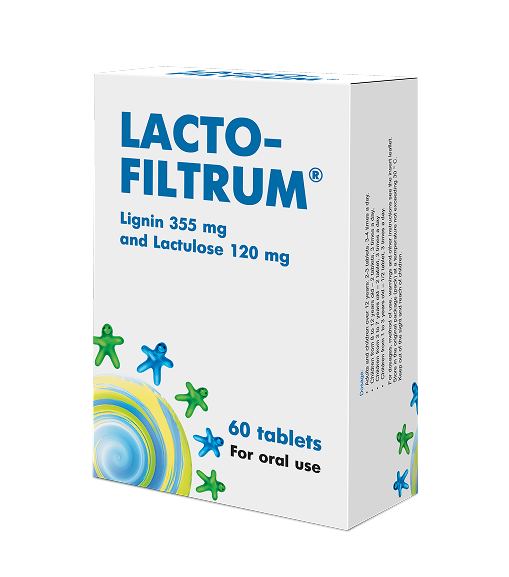
MANAGEMENT OF ATOPIC DERMATITIS / ECZEMA — Enterosorbent + Prebiotic combination
Atopic Dermatitis (AD) is an inflammatory, chronically relapsing, non-contagious and extremely pruritic skin disease. With the knowledge and understanding of linkage between gastrointestinal lymphoid tissue (GALT), immunomodulation mechanisms and dysbiosis, AVVA developed Lactofiltrum® — a combination of an enterosorbent and a prebiotic. Due to its composition (indigestible dietary fibres), Lactofiltrum® tablets are inert pharmacologically.
The clinical performance of Lactofiltrum® is based on its positive impact on the intestinal microbiota and adsorption of intraluminal toxins (enterosorption). Due to the bifidogenic effect of Lactulose, Lactofiltrum® stimulates growth and activity of intestinal commensal flora, leading to a decrease in Enterobacteriaceae and reduced development of endotoxins.
Lactulose also provides a positive environment for immunostimulatory function of commensal flora by stimulating synthesis of short-chain fatty acids by Bifidobacteria and Lactobacilli. Short-chain fatty acids increase the production of IL-10 and TGF-β1 which, being anti-inflammatory cytokines, play a key role in reduction of allergen-induced response. Due to the high sorption capacity of Lignin Hydrolysed, Lactofiltrum® tablets bind and remove allergens, mediators, metabolites and toxins.

● Natural product
● Bifidogenic effect
● Broad spectrum sorption activity
● Positive effect on the gut microbiota
● Removes allergens, mediators, metabolites and toxins
Localized action in the intestine
| Patient Group | Recommended Dose |
| Adults and children over 12 years | 2–3 tablets, 3–4 times a day |
| Children 8–12 years | 2 tablets, 3 times a day |
| Children 3–7 years | 2 tablets, 3 times a day |
| Children 1–3 years | ½ tablet, 3 times a day |
For dosages, method of use, warnings and other instructions see the insert leaflet. Store in the original package at a temperature not exceeding 30°C. Keep out of the sight and reach of children.
CLINICAL EVIDENCE
Treating patients with clinical signs of Atopic Dermatitis
(Clinical Centre of Moscow State University of Medicine and Dentistry, Department of Skin And Venereal Diseases; 2009)
Number of patients: 89 (ages 18-60)
Lactofiltrum® Group:
44 patients with moderate and severe Atopic Dermatitis with SCORAD>25; receiving standard therapy in combination with Lactofiltrum®
Number of patients: 89 (ages 18-60)
Lactofiltrum® Group:
44 patients with moderate and severe Atopic Dermatitis with SCORAD>25; receiving standard therapy in combination with Lactofiltrum®
Control Group:
45 patients with moderate and severe Atopic Dermatitis with SCORAD>25; receiving standard therapy in combination with placebo:
45 patients with moderate and severe Atopic Dermatitis with SCORAD>25; receiving standard therapy in combination with placebo
Conclusions
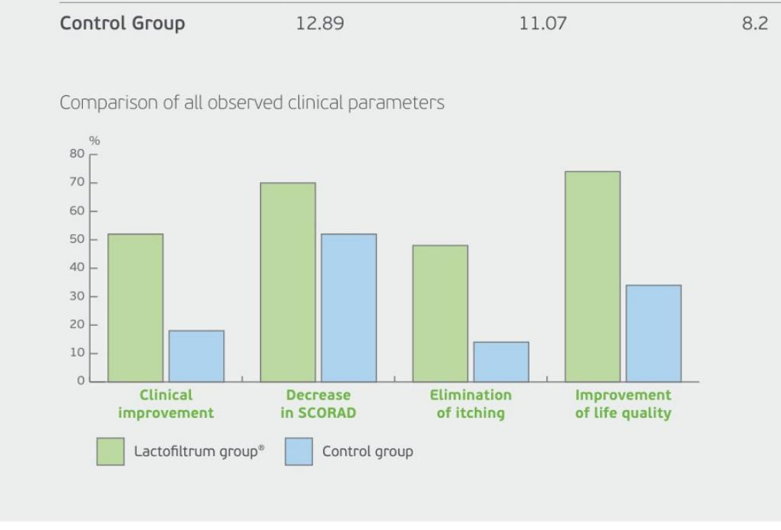
Administration of Lactofiltrum® together with standard therapy of AD improves the efficacy of treatment. It was demonstrated:
Rapid and continuous elimination of clinical symptoms of Atopic Dermatitis, as well as recorded safety of treatment supports a claim of benefit of combined therapy with Lactofiltrum® in this category of patients
Dynamics of changes in skin condition
| Group of patients | SCORAD before treatment | SCORAD on the 10th day of treatment | SCORAD on the 21st day of treatment | SCORAD on follow-up 30 days after treatment |
| Lactofiltrum® Group | 42.23 | 24.9 | 11.85 | 4.31 |
| Control Group | 47.77 | 35.94 | 20.55 | 13.10 |
Dynamics of quality of life
| Group of patients | DLQI before treatment | DLQI on the 10th day of treatment | DLQI on the 21st day of treatment | DLQI on follow-up 30 days after treatment |
| Lactofiltrum® Group | 9.37 | 5.65 | 2.2 | 0.93 |
| Control Group | 12.89 | 11.07 | 8.2 | 6.49 |
Scientific Center of Children Health, Moscow (2003)
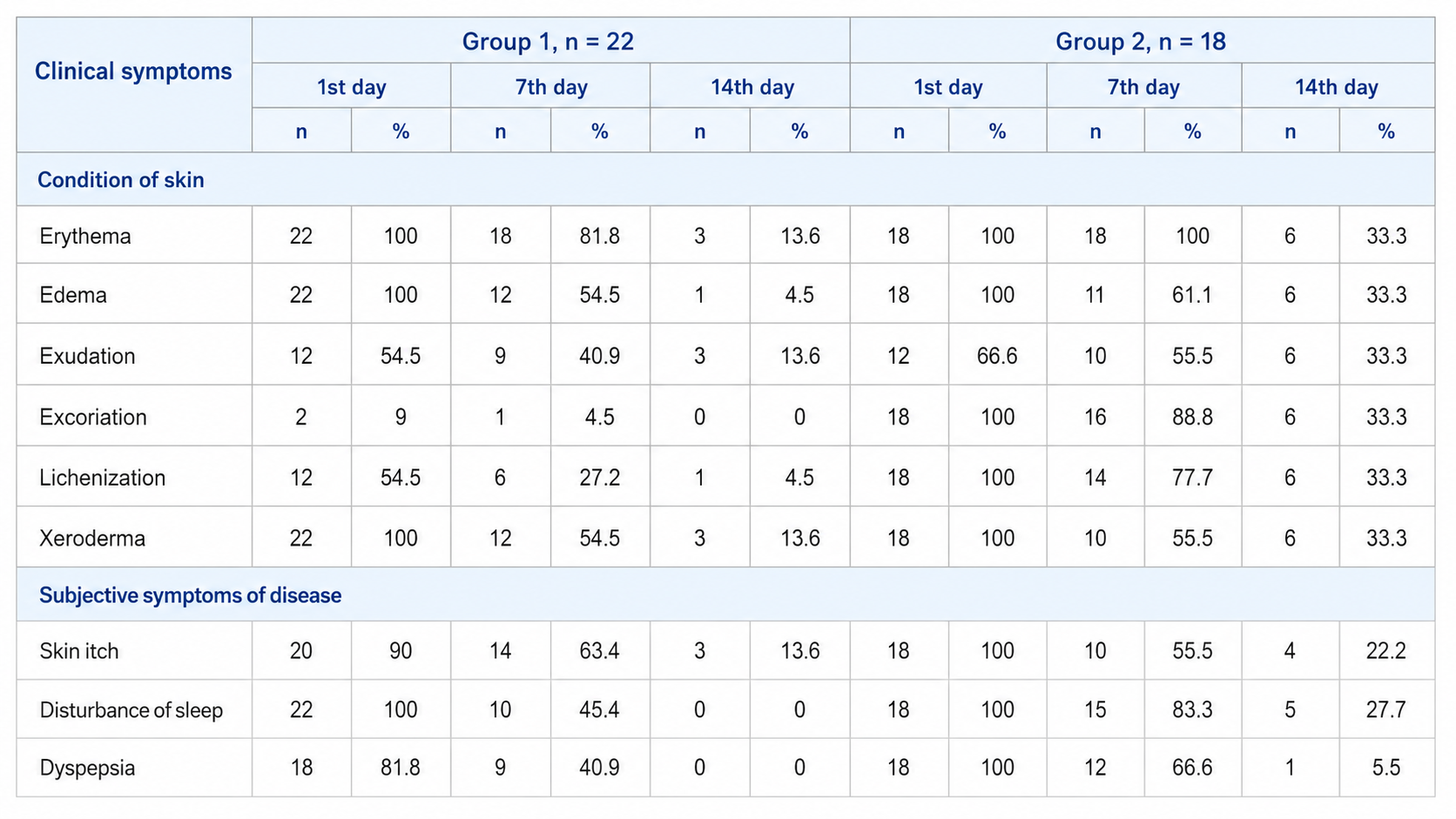
Number of Patients: 40 children (Age: 6 months – 3 years)
Lactofiltrum® can be recommended as a starting therapy for patients with mild Atopic Dermatitis.
Lactofiltrum® can be recommended in combination with topical treatment for patients with moderate Atopic Dermatitis.
| Patient Group | SCORAD Before Treatment | SCORAD After 7 Days | SCORAD After 14 Days |
|---|---|---|---|
| Light Atopic Dermatitis | 29.5 | 8.4 | 4.9 |
| Moderately Severe Atopic Dermatitis | 40.3 | 25.0 | 18.9 |
© 2026 ADAS Pharmaceuticals FZCO All Rights Reserved. Designed By Mightywarner Technologies